
Color Contrast and Texture Rubbings Iguana Watercolor Resist Painting
 Color Contrast, Texture Rubbings & Iguanas Watercolor Resist Painting
This lesson idea was based on Deep Space Sparkle’s Watercolor Iguanas (all credit for the subject matter and concept goes to Patty!).
FUN with TEXTURE Rubbings!
I have changed a few details to line up with my curriculum (Tactile & Visual Texture) and added another component to the lesson that is SO MUCH FUN-we do TEXTURE RUBBINGS on the iguana to simulate their skin before painting with watercolors. I LOVE TEXTURE RUBBINGS with Watercolors!!
 Want more texture ideas–Check out my Non-Objective Watercolor Resist Painting with Texture Rubbings Project
Objectives: Students will learn that artists use contrast to show differences between two things, to make something stand out. Students will learn that texture is an element of art that refers to how things feel or look as if they might feel if they were touched. There are two types of texture: tactile texture & visual texture. They will create visual texture through texture rubbings.
Supplies: Texture Rubbing plates, crayons, iguana reference pictures, Sax 90 lb Watercolor Paper – 12 x 18 inches – Pack of 100

 Create Your Own Texture Rubbing Plates
Shop for Texture Rubbing Plates


Delivery:
- Color Contrast: Artists use contrast to show differences between two things, to make something stand out. When cool colors are placed next to warm colors contrast is created. (show examples)
- Warm Colors: reds, yellows, oranges-these colors visually come towards the viewer & attract your attention first (show examples)
- Cool Colors: blues, purples, greens- these colors visually recede from the viewer (show examples)
- Define texture– an element of art that refers to how things feel or look as if they might feel if they were touched.
- Ask class to list different kinds of textures (smooth, rough, bumpy, pokey, slimy, furry, etc)
- There are 2 ways to experience texture: (by sight & by touch)
- Tactile Texture-texture that is real, you can actually physically feel.
- Visual Texture-texture that can only be seen. It is an illusion that an artist creates to represent texture & fool the viewer’s eye. A Rubbing is a way to show visual texture
 Activity: Color Contrast, Texture Rubbings and Iguanas Watercolor Painting
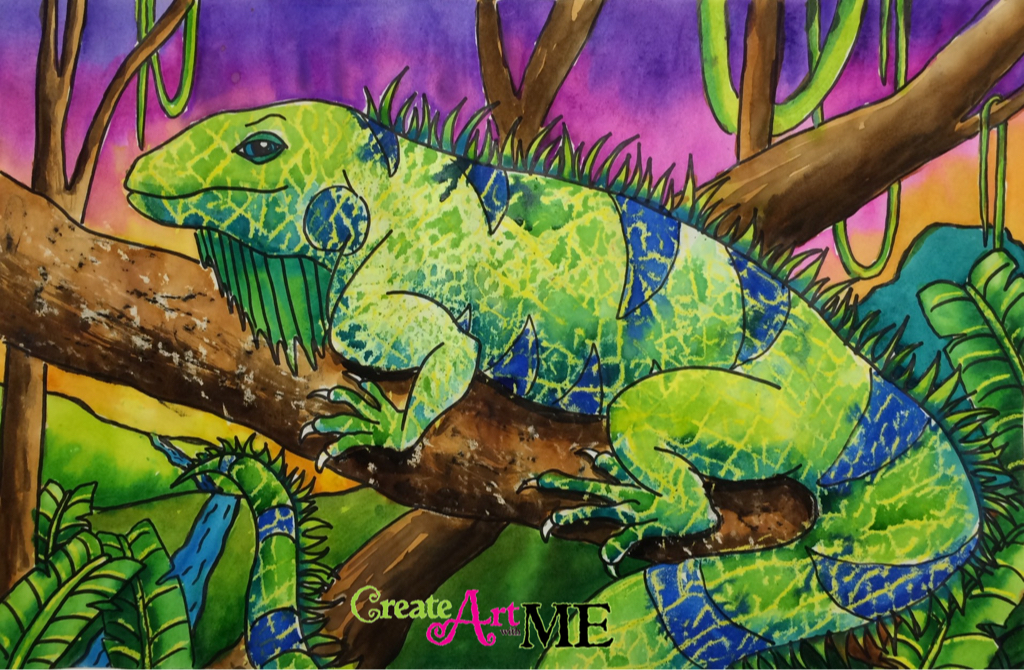
Project Objective: Using iguanas as a subject matter, students will create a visual texture on the iguana & tree bark through the technique of texture rubbing then paint the picture using the crayon resist/watercolor painting method.
Instructions:
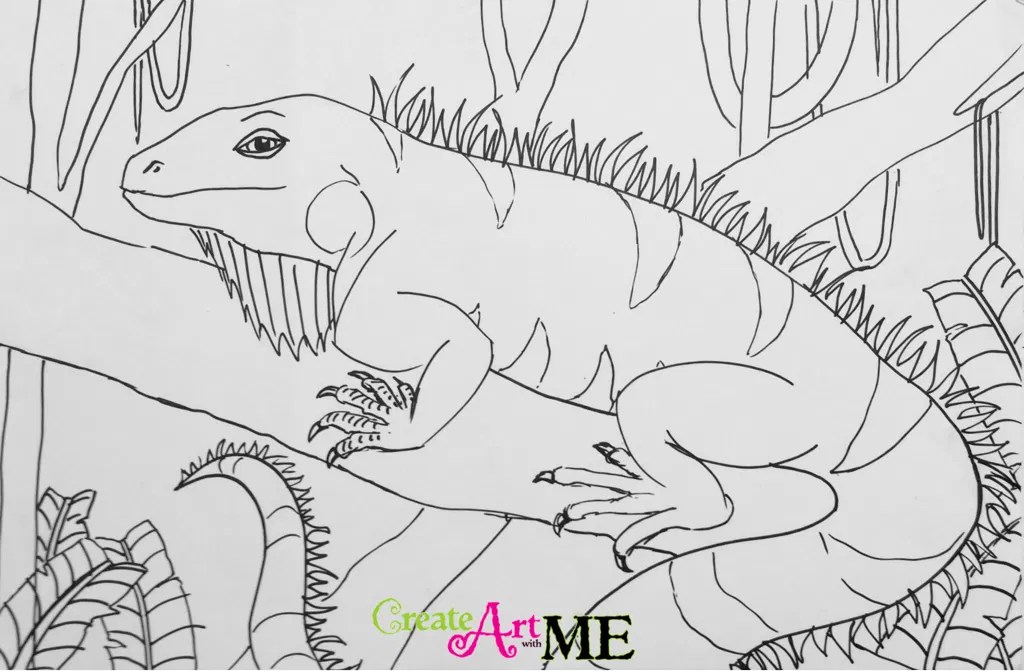
1. In pencil, lightly draw iguana large on the paper. Add details such as the jungle environment: plants, flowers, trees, waterfalls, & vines.
2. Outline with sharpie.
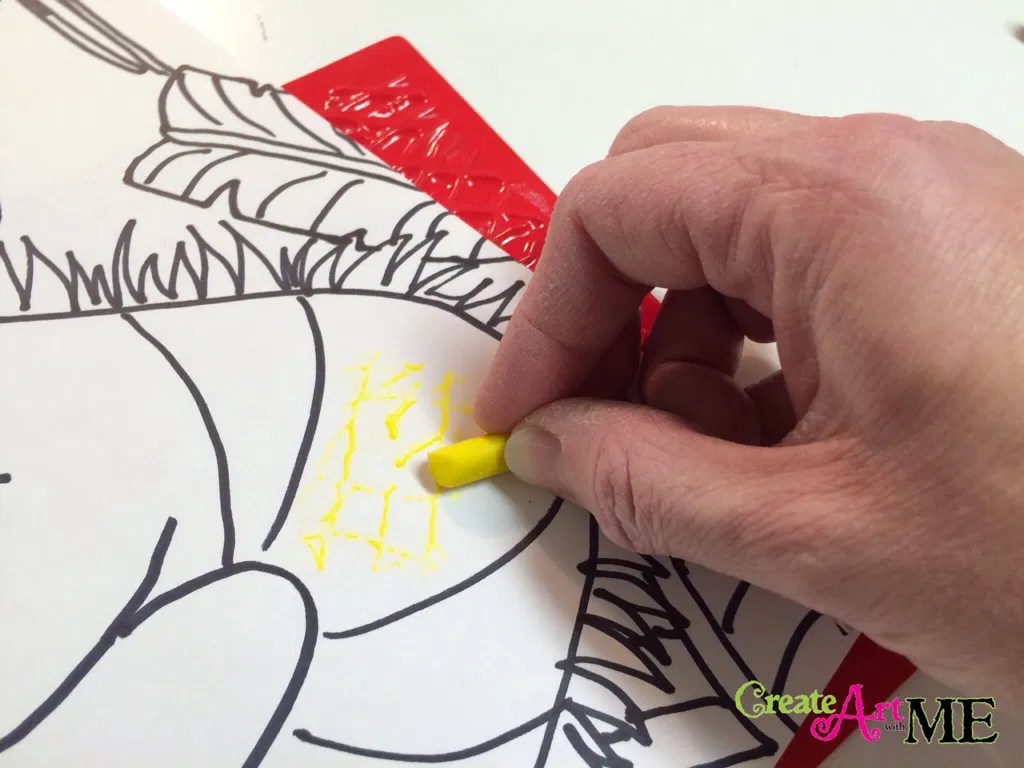
3. TEXTURE Rubbing: place scaly texture plate under the body of the iguana. Use a crayon on its SIDE with the paper wrapper OFF (suggest white, *yellow, or green), rub ONLY inside the body of the iguana. How to Peel Crayons
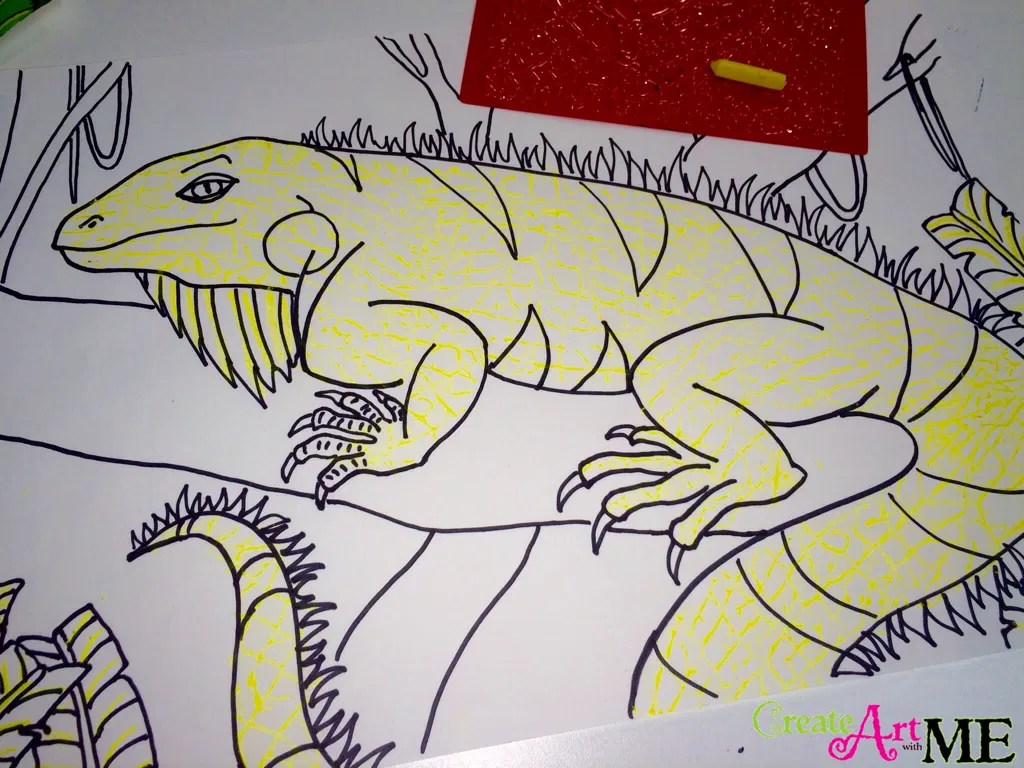
4. Paint with watercolors.

Student Gallery- 5th Grade
(click on picture to see full image)


If you choose to use the information in this post (written or photo), please link back to my blog Create Art with ME.
Additional Watercolor Resist Lessons:

 Warm and Cool Color Hand Print Pattern Watercolor Resist Lesson
 Sand Dollar Pattern Watercolor Resist Lesson
 Color Contrast and Texture Rubbings Iguana Watercolor Resist Painting
 Non-Objective Texture Rubbing & Watercolor Resist

Snowman Painting with Markers & Watercolor Resist


These are great! What kind of paper do you use? I would think watercolor paper would be too thick to do rubbings on.
Also, how do you teach students to draw the iguana? I know some of my students might get overwhelmed at trying to make the iguana look so realistic.
Thanks!
I use a 90lb watercolor paper, the students have to press kind of hard with the crayons & the texture plates are very rigid (this helps significantly!). But it works! Here is the link to the paper on amazon https://amzn.to/337Dnz8
Blessings,
Michelle